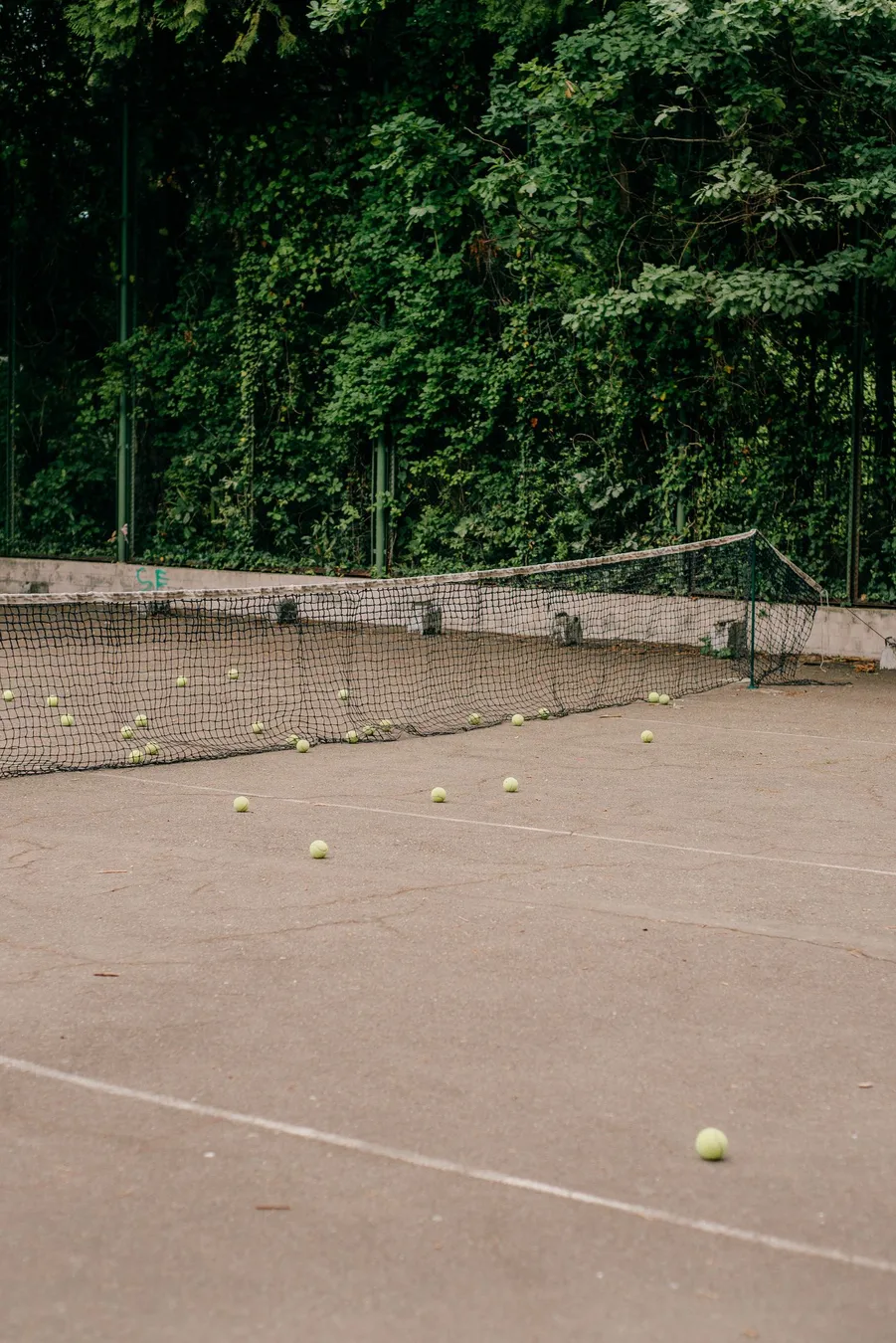
A four-person group practices at half pace. A player reaches the net and clips a good first volley into a corner. Everybody stops and agrees it was a nice shot. As soon as the drill becomes a point, the same volley opens space that the partner cannot cover. The first practice measured whether a ball could land at a spot. The later trial raised a separate question. Could the team play what that first success produced?
Make the first exercise about continuing the exchange. Choose a first volley that most players can hit from a moderate feed. Give it a broad target, such as several feet of space available through the middle on the far side. Someone who is having trouble can take the feed slightly higher or closer. The person sending it should then prepare to play on, as should the volleyer's partner. Keep the speed low enough that all four people can notice the first reply.
Save space around the landing place
Set up a second ordinary target away from the first. One can be shaped toward the center with a workable height. The other can ask an opponent to move out from their starting line. Play a few instances of each without treating a very accurate landing as a point. Let the opponent show what shot they can actually reach after each one. Some replies will be easy when the first ball falls at the height of a comfortable ground stroke. Other balls can require the hitter to change direction or keep the ball in play with a narrower choice.
Follow one position as the ball travels. A partner deeper than the volleyer can start moving once the opponent's likely contact becomes clear. The volleyer can recover to where the two will have separate ways to reach the middle. If both choose the same area, ask what they each heard or saw. A modest first volley can make their movement understandable while a very fast one might take up all of their attention.
Adjust the feed before shrinking the target
A low ball near the net will ask for something different from a comfortable feed arriving higher. Keep one broad destination available for both and try sending two types. The player may prefer to put the low ball higher in the center to allow more time. A high ball might permit a little more direction while preserving a margin. Watch what their partner does during the change. The partner can often tell which reply is useful while the original player is still finishing the volley.
Allow a missed target to remain in play if it was a reachable ball on the court. The next movement can still be learned. A shot that leaves much more space than intended is a useful way to see how quickly a pair can recover from a common variation. An exercise that stops at every imperfect landing can make recovery seem like an unusual event. A live point asks players to respond to a series of imperfect balls.
Compare the choices with a plain match point
Carry the same idea into serving and returning practice. A team can try the easy first volley when the ball is there. If an opponent sends a much less cooperative response, the pair can choose a new initial target. Use one modest observation to recognize when it has become available. After the point, say whether the volley created a second shot people on your side could reach. A winning stroke has its reward. The repeated part of the exercise is seeing what coverage becomes possible.
Finish by letting each player name the first volley they would trust against a moderately difficult feed. Put the two partners' answers next to their likely recovery choices. There may be two perfectly sensible targets for different starting positions. The practice has provided a way to choose between them and to understand why a ball that stays in play can produce a useful result one shot later.
Keep a similar feed for several tries so the pair can identify a trend in the following reply.