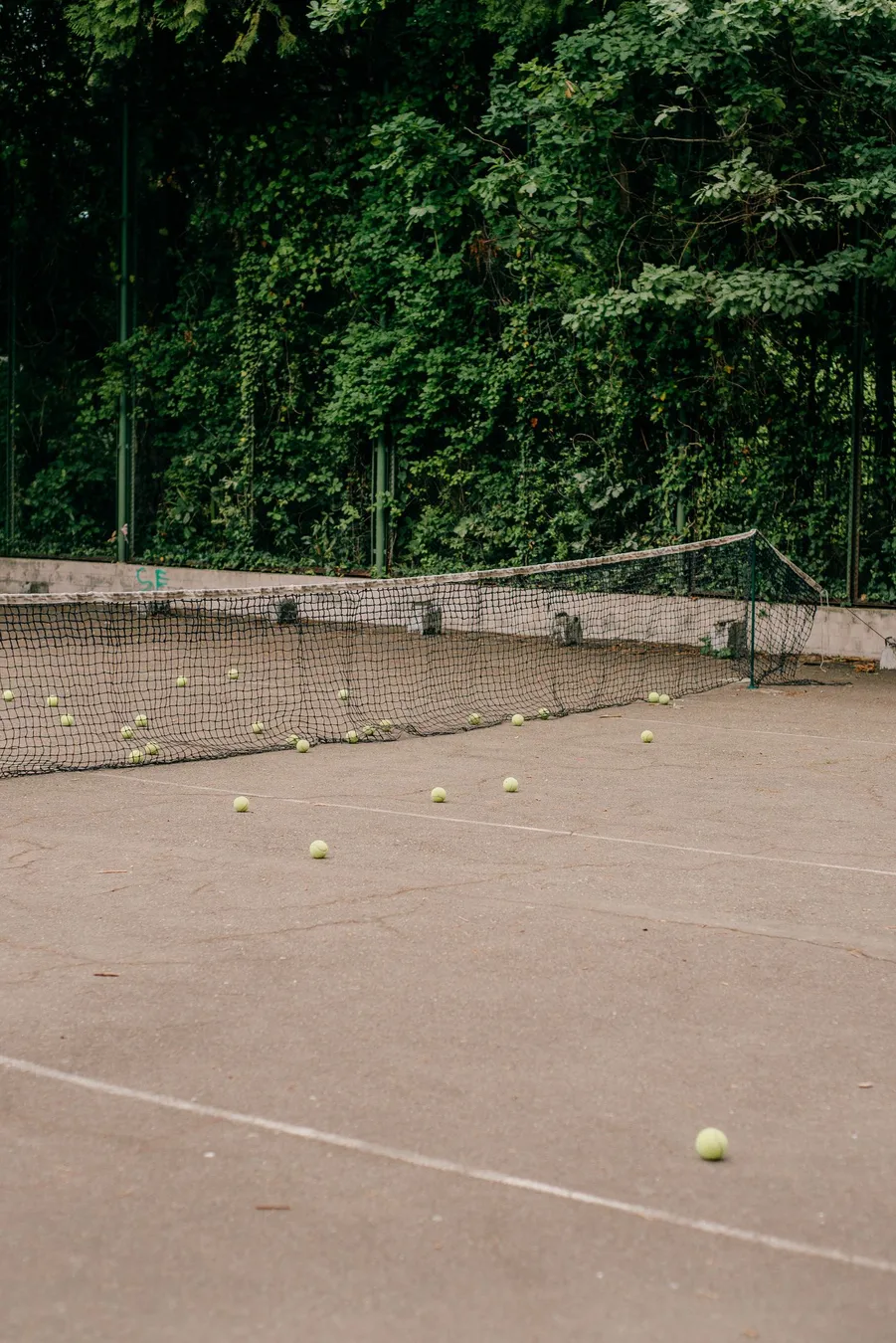
Put four people on a court and assign each person a useful role. One player sends a moderate ball toward a receiver. One waits in the opposing net area and makes their position readable. The receiver's partner prepares for the next shot on their side. The return starts three separate decisions. A cooperative feed gives the group enough time to see whether those decisions belong together. It can reveal a lot before a full serving motion or a scoring pressure enters the exercise.
Begin with a visible lane from the receiver's contact area to a wide region on the other half. Point toward a mark on the fence or use something safely outside the court as a visual reference. A target with width is more forgiving than a single spot on the ground. The aim is to recognize a playable way past the net person and toward the other receiver. Begin with both people on the far side far enough away to leave plenty of room for an ordinary rally.
Change the feed while keeping the same lane
Send three feeds that arrive slightly differently. An early comfortable ball lets the returner see the lane from their preferred contact. A ball farther outside changes the angle. A ball reaching the player close to the body can make the usual lane feel narrow. Pause after a few returns and ask which one required a new decision. The position of the far team may be identical in all three attempts. The returner's own position can change what they can see and reach.
Let several returns go on for one extra exchange. The partner's next movement can tell you if the lane is buying anything. A return that lands safely but gives the opposing player a comfortable shot through the partners may call for a different recovery. An ordinary deep return can move the opposing player far enough to give the team a second ball they can handle. Discuss the observable effect before changing the target.
Move the person a little
Take the opposing net person a small distance from their original place. Let the returner notice and choose whether to keep the lane or widen their target. A reaching volley can turn a previously comfortable trajectory into one the receiver now has to pass farther from the net player. Some balls will be easier to send at greater height. The best practical choice depends on which shot the receiver can repeat to a reasonable margin and how comfortably the player near the net can cover it.
Allow ordinary mistakes. An attempt that misses long can still show the group that the aim carried the ball past the right spot. A ball that lands within the court can still travel directly to a prepared racket. Give each attempt two observations. Where was the ball going, and what did the opponent actually do? They help isolate a target choice from the ability to execute it on the available feed.
Collect two ways to begin a real point
A group can keep the feed but add the names of two options. One can be a regular crosscourt target for a ball arriving in reach. The second might be a lower effort route for a ball arriving late. Ask each returner to name the contact they associate with those choices. Then have the partner describe their position for the following reply. Two modest plans can give a new pair something visible to look for without asking either partner to remember a detailed map.
Let the court settle into normal points. Stand where you will probably return from and look for the same visual lane before the first serve. The next few serves will change the location, time and movement available. A practice lane is a way to see those changes. It has done its work if you can recognize why one ball invites the ordinary target and the next only asks that you buy enough time for both partners to play a second ball.
A broad lane gives the group more examples of playable returns to discuss.