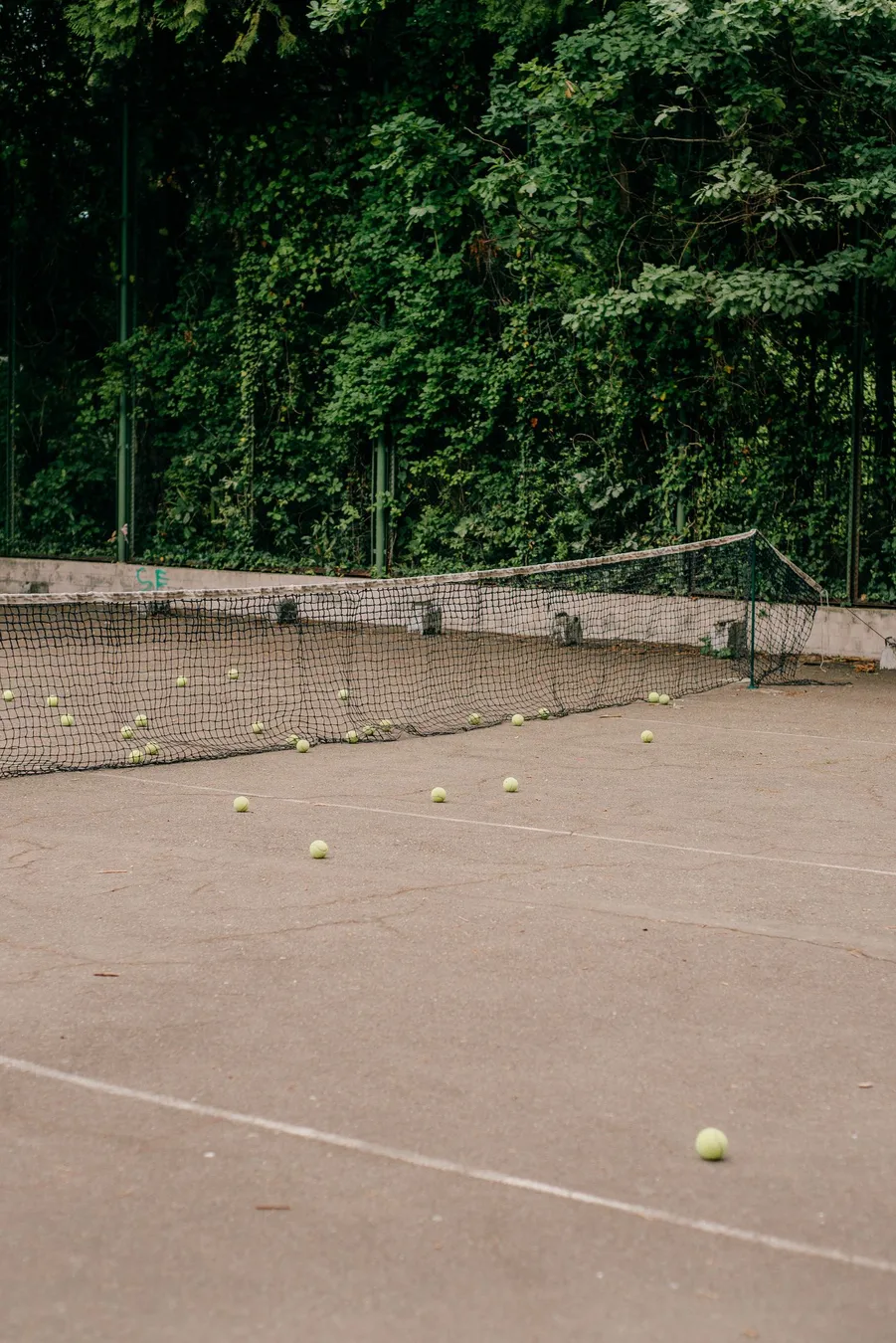
At the start of a doubles practice, one player is cheerfully feeding and three are ready to move. After several minutes two people are still busy, one is waiting near a fence and one is collecting most of the stray balls. Everybody is on a court. The drill's design has divided effort unevenly. A modest rotation can preserve the idea of the practice while letting different people experience why the point develops.
Give the feeder a repeatable action, such as putting a comfortable ball into a partner's reachable space from behind the opposite service line. One person replies, the next prepares for an ordinary second shot and the fourth uses that choice to place themselves for a possible third. Explain each job in one short phrase from where it begins. Players can then see when an exercise asks them to wait for something they could not reasonably observe.
Rotate a useful decision
Move the players after an equal number of starts instead of after one group succeeds. Some players receive easier feeds and reach a target sooner. Equal tries give someone facing a harder angle enough information to make a small correction. A rotation after four or five sequences can keep change frequent while allowing an ordinary response to become familiar. Pick a number the group can remember without keeping an elaborate score.
The most useful order follows the point. The person making the first response might next defend the reply they usually give. The feeder can then see whether their feed made the exercise realistic from a new position. If somebody remains in the same role for two rotations, give them something new to observe, such as how the depth of their own partner varies as the feed travels wider. Free time is useful when it offers a clear view of action.
Let an exception remain playable
A feeder occasionally sends a ball into the wrong part of the court. A fast reset can be right when the feed lands outside playable space altogether. Keep the odd ball that people can reliably reach and ask the receiving side to adapt its placement. The unexpected contact often exposes how well the pair understood the drill's real purpose. If the pair has been practicing protection of the middle from a recognizable feed, they will feel when a wider ball asks for a different starting step.
Try starting without a person assigned only to feed. Let each group send a gentle first ball across and continue after it. This can make rotation simpler when someone needs a short break. Give the exercise a condition that can survive the new setup. The people on one side can still practice communicating about the third ball, even though the first ball no longer comes from a fixed position.
Give collecting balls its own interval
Agree on a short shared collection period once the court has several loose balls. Each person can begin nearby, and active play pauses until the court is ready. A person gathering stray balls during a live exercise has less attention for movement and may be in somebody's way. An explicit pause can also give a pair ten seconds to describe the last useful contact. Then put a new feeder in and begin again.
Close with ordinary points. The player who fed repeatedly can take a receiving job. Someone who waited for the third ball can watch what that job feels like when an opponent has real choices. Notice whether people recognize the moment the exercise addressed. If they can each describe it from their actual position, the rotating jobs have given the whole group more than a set of turns. The session can end with the same four people involved in the same game.
Give the incoming feeder one practice start before counting the attempt toward a round. This leaves people time to find a safe position and reproduce roughly the same feed. A well organized change of roles keeps the next series about a tennis decision and allows people to prepare comfortably for a ball from another position.