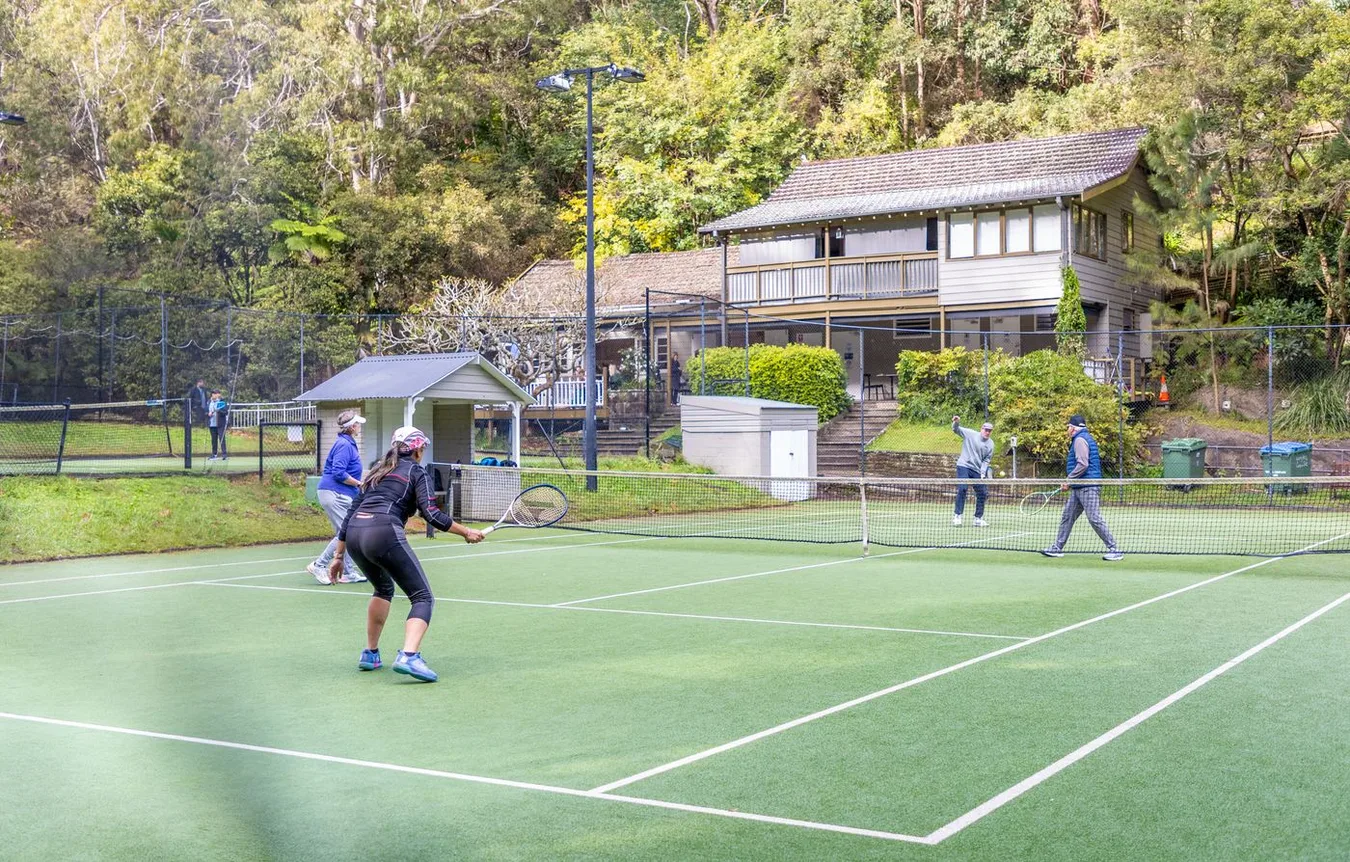
A net player watches their partner send a ball diagonally to the opposite corner. The next striker can direct a ball down the line, so the net player moves quickly toward the alley. The reply comes through the middle and the team no longer sees an easy route to it. On the following point, the net player stays central and the opponent finds the line. Both movements addressed a real threat. Neither paid enough attention to what the opponent could actually do with the ball that arrived.
Visualize two angles from the expected contact point. One leads down the line and one crosses toward the interior. Picture an opponent standing in balance. Then picture that opponent reaching farther out than their starting position. Choose a net position giving both partners access to one or more likely replies from each contact. It may make sense to protect the line somewhat while still keeping a clear first step toward the interior. An active choice can be small and still change the options available.
Distinguish leaving space from conceding a ball
In a modest drill, send a wide ball and let the far side choose one of two destinations. Place the net player where a short movement toward either is possible. The deeper partner should observe the relationship between that move and their own coverage. An opponent getting to a ball late may have a path down the line and little time to direct it. The net player could leave a demanding angle slightly open on that trial if both partners are otherwise well placed for the more comfortable option.
On another feed, the opponent reaches early and can choose comfortably. Move a little farther toward the line and compare what remains in the middle. The deeper partner can see whether that area has become an easier target. If both partners change in the same direction, ask whether they still have separate ways to react. You can get a clear view of the choice without trying to cover every angle at once.
Compare the same position with a different height
A low ball struck close to the court can produce different possibilities from a high one that lets the hitter see more space. Try the same starting position while changing only the feed height. Observe the net player's easiest movement and the time the partner has for a central reply. One photograph of the court might look identical in both trials. The available time gives those positions different meanings. Keep a note of where the height caused one player to see a different response before the other.
Ask the opponent which destination they reasonably wanted to use. They may have seen an opening that the two defenders considered unimportant. Try that ball at a comfortable pace and see how much movement it actually took to cover. If the option was difficult to repeat even with good balance, the pair can give it a little less priority. If it arrived easily from a broad range of contacts, shift the starting positions and ask what gap they created.
Bring the test into two ordinary points
Pick a movement the team can see and discuss between points. The net player might take a step toward the alley when a particular wide ball gives an opponent ample time. The partner might recover slightly toward the gap that opens. Let both ideas fit the actual direction of the shot rather than trigger on every diagonal. The next point may offer a short reply that asks the pair to use its familiar neutral position instead.
Judge the next movement by the choices each player could still see. Ask whether the opponent played the angle you expected and whether that first step made the team available for a second ball. A defended line can tell the opponent to choose something else. It can also help two teammates notice together what the rest of the court is doing.
Follow a reply up the line far enough to see the next assignment. Defending that path is valuable when both partners can still see a useful role for themselves afterward.