The return passes between two players who both begin to move and then both stop. Each has read the other partner's first step as an announcement. A moment later they are looking at the baseline behind them as the ball bounces twice. The problem began before either racket came forward. The team had two private ideas about the middle of the court and no useful way to resolve the difference during a fast exchange.
Start by distinguishing the middle on paper from the space between two players in motion. Your partner may have moved toward a sideline to meet a wide ball. A reply that lands slightly to their side of the center line may still be closer to you. In the next point you could both be set at about the same depth and have similar reach to the same spot. Those two balls invite different answers. A good default helps with the second situation and lets your movement solve the first.
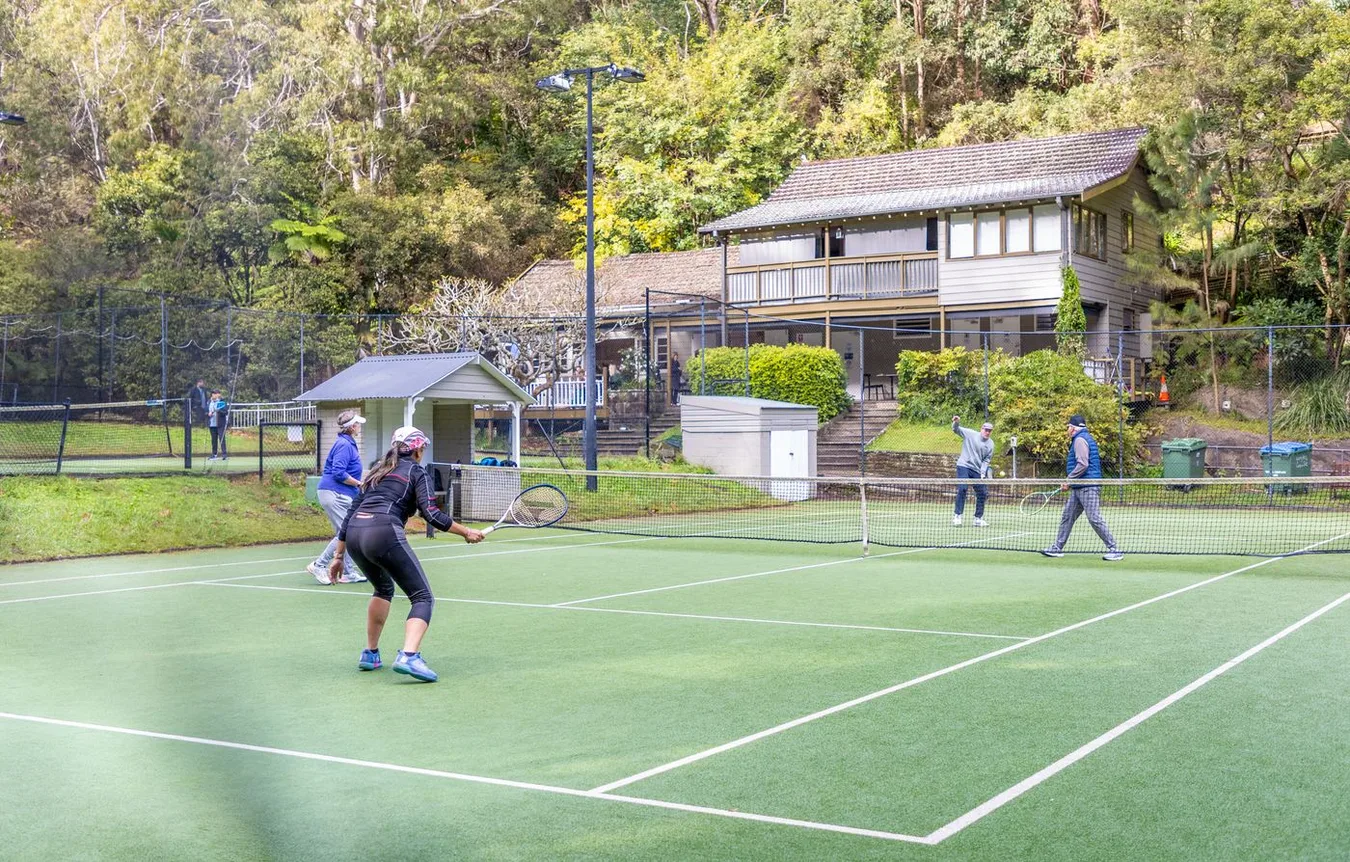
An agreement for the ball both people could play
Discuss an example at the net before beginning the warmup. Stand roughly where you expect to play the first volley and ask your partner to point to the ball they would consider shared. An imaginary ball down the painted center is a convenient example. If one person's forehand faces that space, you might give that person the first option. Two forehands or two backhands invite a conversation about balance, angle and who is already moving. Choosing the most comfortable shot is useful when both partners are plainly in position to play it.
Try making the default conditional on height. A chest-high ball between two ready partners is different from a low ball that dips behind the racket of the person who would normally take it. The low ball may be within reach of the deeper partner, who can step forward and see it clearly. Agree on a short call that fits that exception. A loud single word spoken early gives the other player information while there is still time to adjust. An elaborate announcement can arrive after the team has already committed.
What the other partner does next
Ownership of a shot changes both players' jobs. When your partner moves toward the center, let their racket have room and watch the part of the court you can protect from the next ball. That may mean closing the space they left on their original side. It may also mean staying ready for the same opponent to play behind you. Use your partner's direction and the opponents' positions rather than a preset sprint to the sideline.
A short practice makes this visible. Start two players at different depths and ask a feeder to send moderate balls into the space between them. Pause a few points right after contact. Look at the positions of both players and the two opponents. Ask who would be able to reach a soft reply to either side. Then let the next group of points continue. The frozen picture is only a way to notice space. The live exchange tells you whether the second movement kept the team available for another shot.
When the default needs a change
Listen for points where the call came after two moves were underway. The repair could be an earlier call, a smaller initial step, or a default that matches how this pair actually moves. You might notice that one partner recovers from a wide ball more slowly because they have farther to go. Give the central reply to the partner who can see that recovery happening. Another pair might make a different choice because its players stand at similar depths and volley comfortably in both directions.
Take one observation into the next game. If a fast ball split you on the first exchange after the return, try settling the initial gap before discussing every kind of shared ball. If your positions were sound and both rackets were ready, listen for the moment a call would have prevented hesitation. By the end of a practice the team should be able to describe what each player does when a central ball is available. The answer should sound like two coordinated movements instead of two claims on the same patch of court.