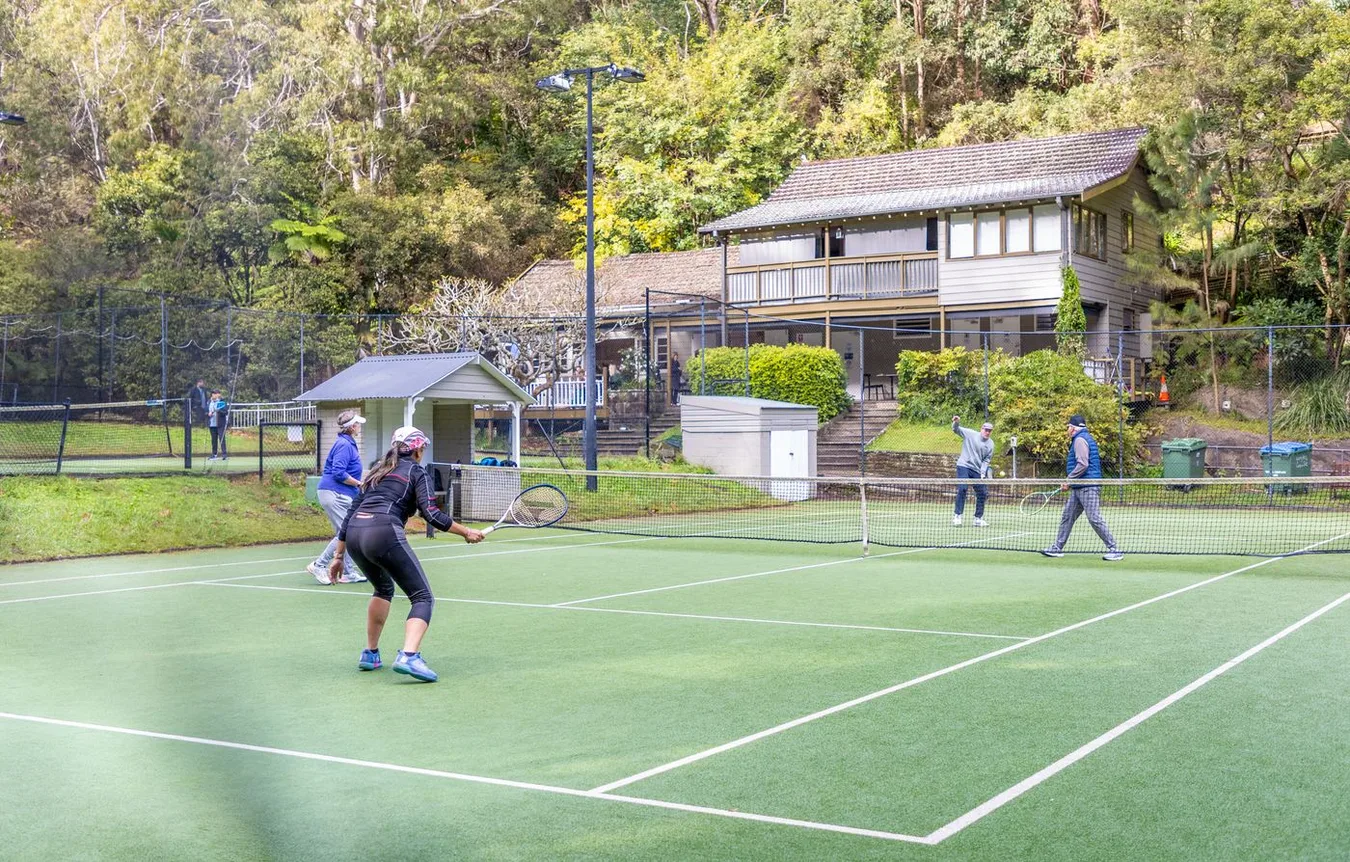
The volleyer reaches wide to an alley and sends a soft ball over at an angle. The closest opponent has room to run but few comfortable destinations once they reach it. The volleyer turns to look at the result, while their partner stands behind their previous position. The return arrives in the middle to a racket that has to hurry. A good first action left what might have been an easy next ball feeling like a surprise.
Run the sequence at a pace you can control. Put the first volley somewhere reachable so the next shot actually occurs. Have the partner give attention to the stroke across the net before tracking their own later distance. A ball sent short and wide can change where the opponent makes contact. It can also change the line to a target behind the volleyer. The pair can see those changes if each player follows the effect of the shot past the first bounce.
Name the thing you are waiting to see
An opposing player running hard may meet the ball low and late. Their easiest reply may be a ball with room to clear the net, giving the pair time to settle. Another opponent can reach the same ball early and direct it with purpose. The first difference to see is quality of reach. Make the partner describe what the player across the net could choose. The observation can be small. They can still send the ball straight or the only visible target is the open middle.
Next let the opponent choose between two replies. Watch what it does to the first volleyer's second movement. A player may come back toward their usual side too quickly and leave a nearby straight ball to land behind them. Another may remain completely still while a soft ball toward the middle begins to drop. Give the volleyer a reachable starting point after contact instead of an obligation to return to exactly the previous place.
Make the pause tell you something
Stop a few trials when the opposing player is about to strike the second ball. Ask each partner to point toward the part of the court they expect to protect. Look for a section both people have claimed and one that has no obvious next move attached to it. Move one player a small distance and compare the new picture. You can learn from a freeze, then run the same kind of ball again without interrupting the timing.
Some useful positions appear farther back than you expect. If the wide volley was only barely made, a step toward a safer shared line may give the team more choices than a step forward. In another trial the short shot has made the opponents move so far that a partner can take a useful ball early without exposing a large part of the court. Compare the two replies before choosing what the next move should be.
Practice leaving an opening deliberately
Every shape leaves some possible destination. Decide which one is least accessible to the person who will take the next ball. An opponent running toward a corner may need to change the racket path considerably to pass the partner on a narrow line. A shot into the middle might be simple. Watch a handful of actual points to discover whether this choice fits the group today. Less common destinations still matter, but partners can prepare first for plays they can realistically anticipate.
In the next set, think of one position where the first contact has pulled a player well out of the team's familiar arrangement. Watch the opponent just long enough to decide which movement now belongs to each partner. A good second motion is small enough to be available on an ordinary ball. After a wide volley, that small action gives the team a way to continue what its first shot began.
A team can also compare a slower volley from the same width. The extra time gives both partners a chance to notice if their second steps are based on habit or a contact they actually saw across the net.