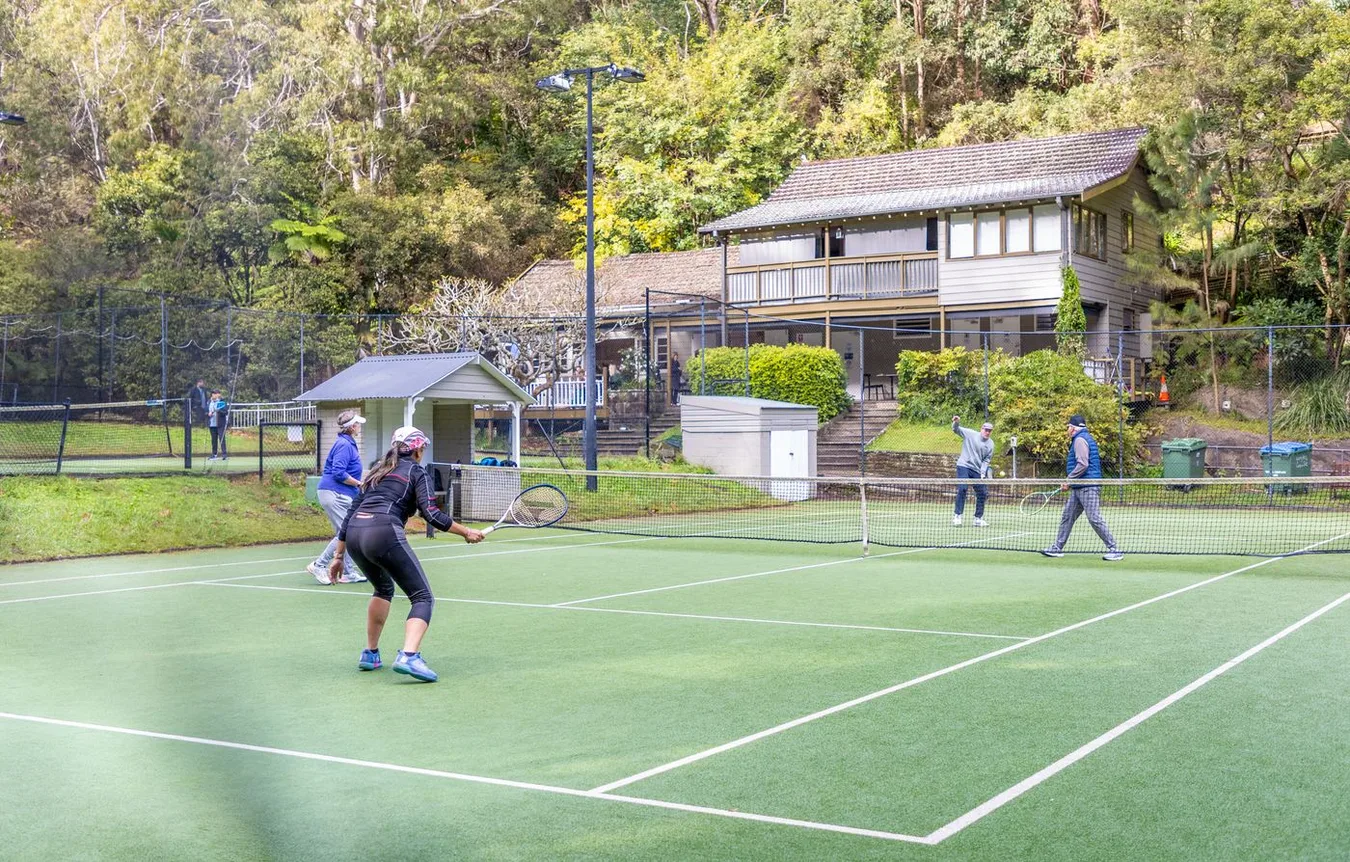
Imagine the players on the receiving side drawn as two dots. One stands deep enough to take an unhurried swing through a fast serve. The other waits just behind the service line. A server notices the large gap and finds a ball that comes back slowly through it. The two dots do little to explain why the gap survived. The process began when the returner took an extra step back and the partner kept the same position by habit.
A receiving pair can choose a starting shape in response to the serves they are seeing. Begin by locating the area where the server is repeatedly putting the ball. A deep return position may give the player more room and more time in a particular matchup. That choice can open an angle or increase the distance a return needs to travel. The partner has a chance to account for those consequences while both people still have time to move.
Use the shot the returner can actually hit
Suppose a fast serve drives into the body and the returner expects a compact, low reply. Start the partner where they can see the opposing net player and cover a reachable ball after the return clears them. Ask which ball becomes especially difficult from there. A softer set of serves might allow the returner to step in and take a rising ball early. Both partners can take that new timing into account. Their exact depth can change depending on how much ground they can comfortably cover next.
A slower second serve may invite a forward position, but reading its height and direction also takes time. Look at where the first return was actually struck. If the ball carried farther back than expected, the returning partner may be preparing in the wrong place for the next shot. Use a brief conversation to set an ordinary target and an ordinary waiting spot. Give the returner a way to signal that they are conceding depth for a particular point.
Take note of the height the reply buys
A high crosscourt return can provide time for both receivers to settle. It can also give the serving pair time to choose. Watch two or three comparable points closely enough to see what both sides do after the ball leaves the racket. If the server needed to move back, there may be room for the receiving partner to step toward an available volley. If the opposite net player has a good view of the high ball, the partner might keep space for a fast reply before moving.
Use another pair as observers during a practice. Ask them to point to the space they would try to play when your return goes up, and again when it stays low. Their observation describes a way to use the court that is visible from the other side. It may help you find a place to begin. Keep a different plan ready for the chance that the serve pulls the returner outside the intended path.
Rehearse one moving position
Run a sequence where the returner is fed one comfortable ball and one deeper ball. Ask the partner to point out the moment their movement should change. Check whether one player consistently completes an adjustment long before the other had enough evidence to make it. Begin at a pace that leaves time to see the reason for each movement. Bring on a third ball when the pair can stay aware of the opponent as well as their own parts of the court.
In the next match, choose one test for the first receiving game. Perhaps the partner moves a small distance back when the returner moves well behind their normal place. Check the decisions from the first real replies. Two players start working together when each can use the other's depth as information. The location on the court can remain flexible while the reason for being there becomes shared.
Observe a couple of returns that never reach the preferred target. The partner's waiting position should leave a response available when the receiver has to change the shape of a ball unexpectedly.