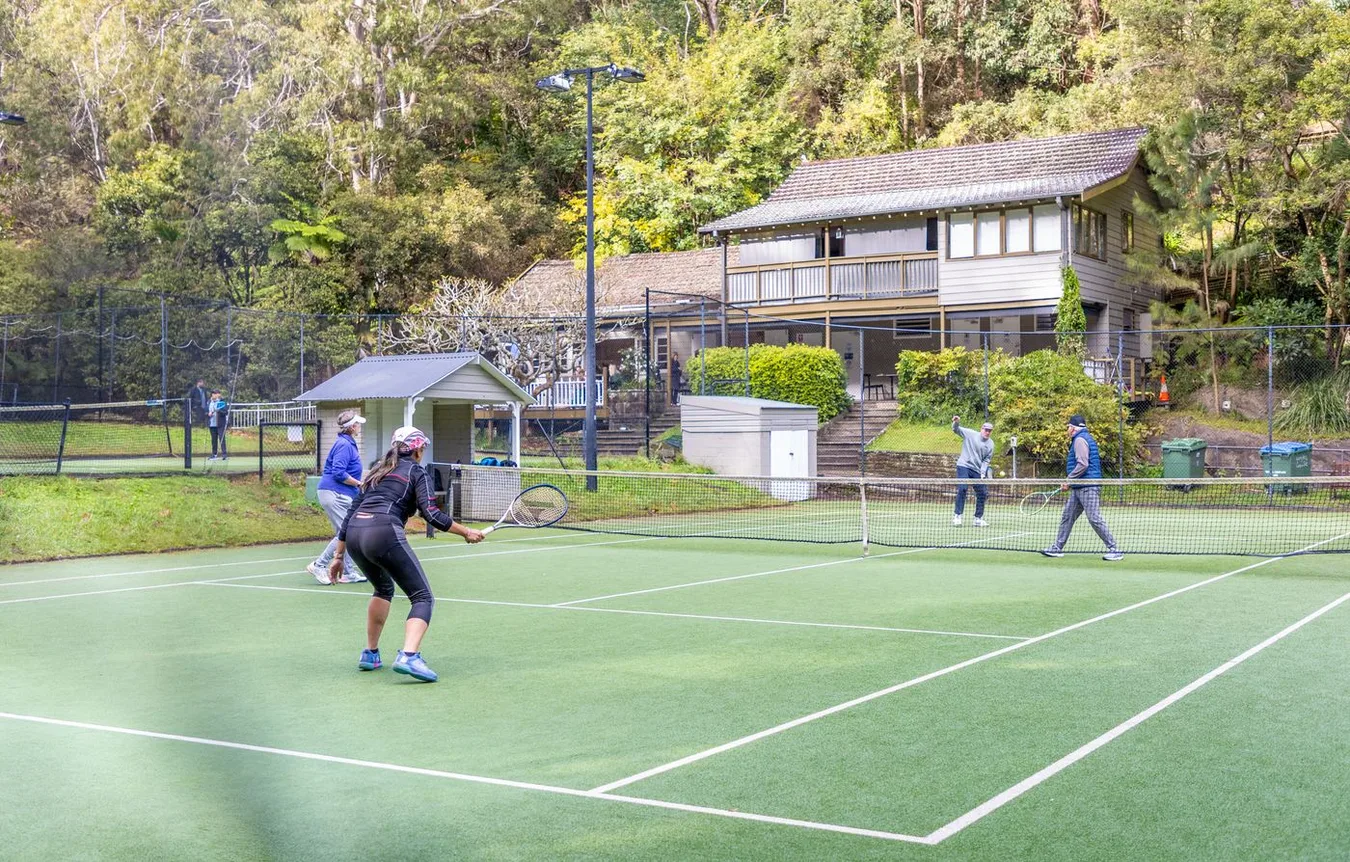
Two members of a receiving pair have retreated a step. The opponent hits a ball that lands short near the middle. The person nearest the ball can get there with a little time, but their partner moves up simultaneously and loses a view of the player across the net. A subsequent ball sails deep while both people face forward near the service line. A shared movement had looked coordinated. It did not give the pair something they could use after the first reach.
Think about how a small difference in depth can appear within a point. The player returning a wide ball may already be farther behind. The other player may first need to stay close enough to observe an opposing volley. Put those differences to work. A player with a clear look ahead can react to a ball entering their range. The partner deeper back has a chance to see what has opened behind them. Those jobs can change within two shots.
Find a starting gap both players can support
Begin a drill with one person slightly ahead of the other and allow a moderate feeder to choose a short or deep destination. Let the two in practice know which general areas the ball can reach. Ask the nearer partner to name the reachable short zone and the deeper one to describe their view through it. If neither player can see the other's first movement, try bringing the depths a little closer before increasing pace. A small difference in starting position may be enough to give one person more time on a ball that goes past the other.
Move the width independently. A narrow pair can cover the middle while inviting a steep angle. A wide pair with staggered depth can offer a clear path in the middle. The space between them changes when one person moves before the other. Keep width constant during the first comparison so you can see the effect of depth. Change it when you have identified a need the deeper or shallower position could not answer.
Observe two returns in sequence
From the first feed, ask the nearer player to put a manageable volley back in play. The partner deeper on the court can look at the opponent who will take that ball. The shot may push the opponent back, buying time for both partners to move to a new position. It may give an opponent a chance to drive at the feet of the closer player. That person may then need space to retreat while the partner has a chance to hold a line.
On the next feed, send a ball that goes beyond the nearer player. Allow the other partner to return it at a height and speed available from where they are. Watch the near player's position after the reply. Moving closer to the net automatically can leave them vulnerable to a very prompt answer. Remaining still might miss a useful volley created by a higher, deeper ball. Let the reply reveal whether an opportunity to change depth has actually arrived.
Play for a comfortable next ball
Resume ordinary points from a lightly staggered shape. Aim to recognize the actual contribution of each player's depth. A pair may discover that the closer person's field of view matters more than their ability to reach an immediate shot. The extra time held by the farther player can permit a steady response when a ball initially seems out of reach. Neither contribution requires a fixed distance.
At a change, describe one moment when the different depths served the pair. Describe the next contact from both players' views. If the closer player did not get a chance because the deeper one could see or cover another ball, that can still be effective positioning. A useful arrangement leaves the pair ready to move together when the reply permits it, and gives each person useful information while the next choice is still open.
When the pair feels ready, start once with the roles reversed. A different person may see the same height from quite a different location, and the useful positions can change with them.