Four players reach a court together and take opposite ends. The first feeds are quiet and straight. Everybody gets a little timing. A few minutes later the first live serve starts and two people discover that they have never faced a return moving away from their positions at the same instant. The warmup got the strokes moving but did little to show the shape of a doubles point.
Make room for the ordinary cooperative start. Let people adjust their pace and choose a comfortable range. Introduce one useful relationship once they are ready. Ask one pair to send a few crosscourt balls while the other pair leaves a sensible lane for them. Use the broad part of the court as a target. This is a chance to see where a partner recovers after a wide ball and how far a ball needs to travel before it really changes the next movement.
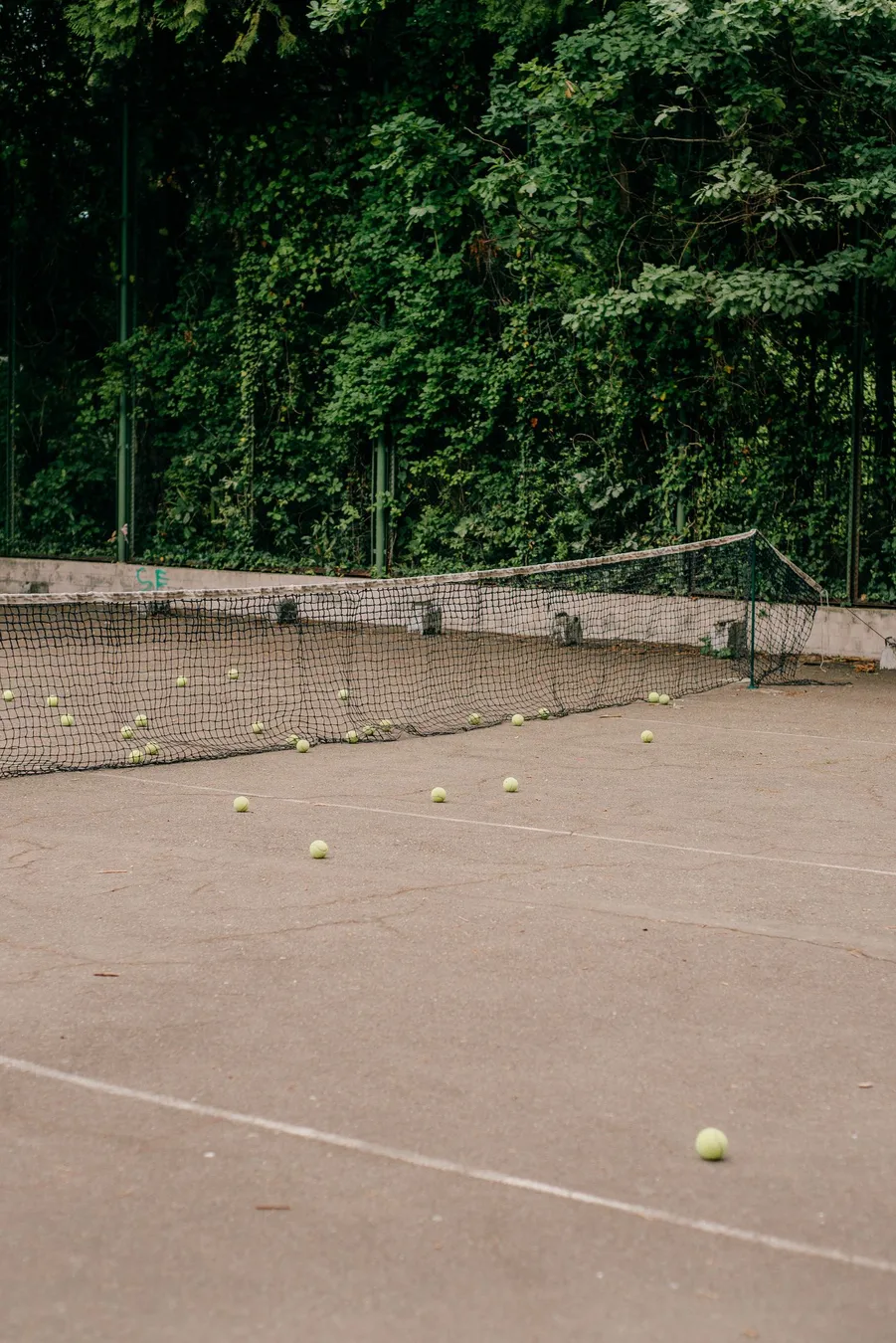
Notice the territory a safe shot buys
Suppose a player reaches toward the doubles alley and sends a high reply diagonally across. That ball gives their partner time to adjust. Watch an easy feed and then a wider feed. If the partner's position is identical in both rallies, pause and point out the space the next shot could enter. The observation is about the shared court existing at that moment. It need not turn into a general lesson about how far to move on every shot.
Try repeating the two feeds without calling them in advance. The partner has to watch the direction of travel and the hitter's recovery. Do a short run at modest pace so the people warming up have time to look. A useful sign is two players finding their next spot at related times. If the wider hitter is still moving and the partner has already settled close to the center, there is a brief period when the pair has left one side especially open. Change the starting positions and see whether the same issue returns.
Add a first volley
When the group is ready, a player can make one ordinary volley into available space. Begin near a position that feels realistic for the doubles a pair expects to play. The feed can arrive high enough for a comfortable response. Give the person behind the volleyer a small job. They might call a deep ball that passes beyond the volleyer, or move far enough to see the opponent who will take the next shot. The feed and the response both belong to the exercise.
Let one sequence go on for a couple of extra balls. The first volley may land in a place that looks useful and still give the opposing pair a comfortable reply. Give the original pair a chance to play that reply. On a second run make a different choice with the volley and compare the available next stroke. Closing the exercise after the first ball would hide the very thing the pairs came to practice.
Save a moment for the first return
Ask each player to name a target that feels reachable against an unfamiliar serve. Point to it with a ball in your hand. Leave margins that make sense for how that player is moving today. A player whose return is often late might give themselves a larger area. Someone starting with a compact block could choose a safe height based on the opposing net player's position. The players can learn more after they have seen a couple of real serves.
Use one short rally as a check that the group is ready for normal points. Give both people on a side room to call a ball and to recover. If the people waiting turn into spectators for long stretches, change the feed or trade roles. A first warmup has done enough when players can take something from it directly into the opening game. For one pair that could be a common call for the middle. For another it could be a more useful waiting position once a partner gets pulled wide. An ordinary point can show the difference.