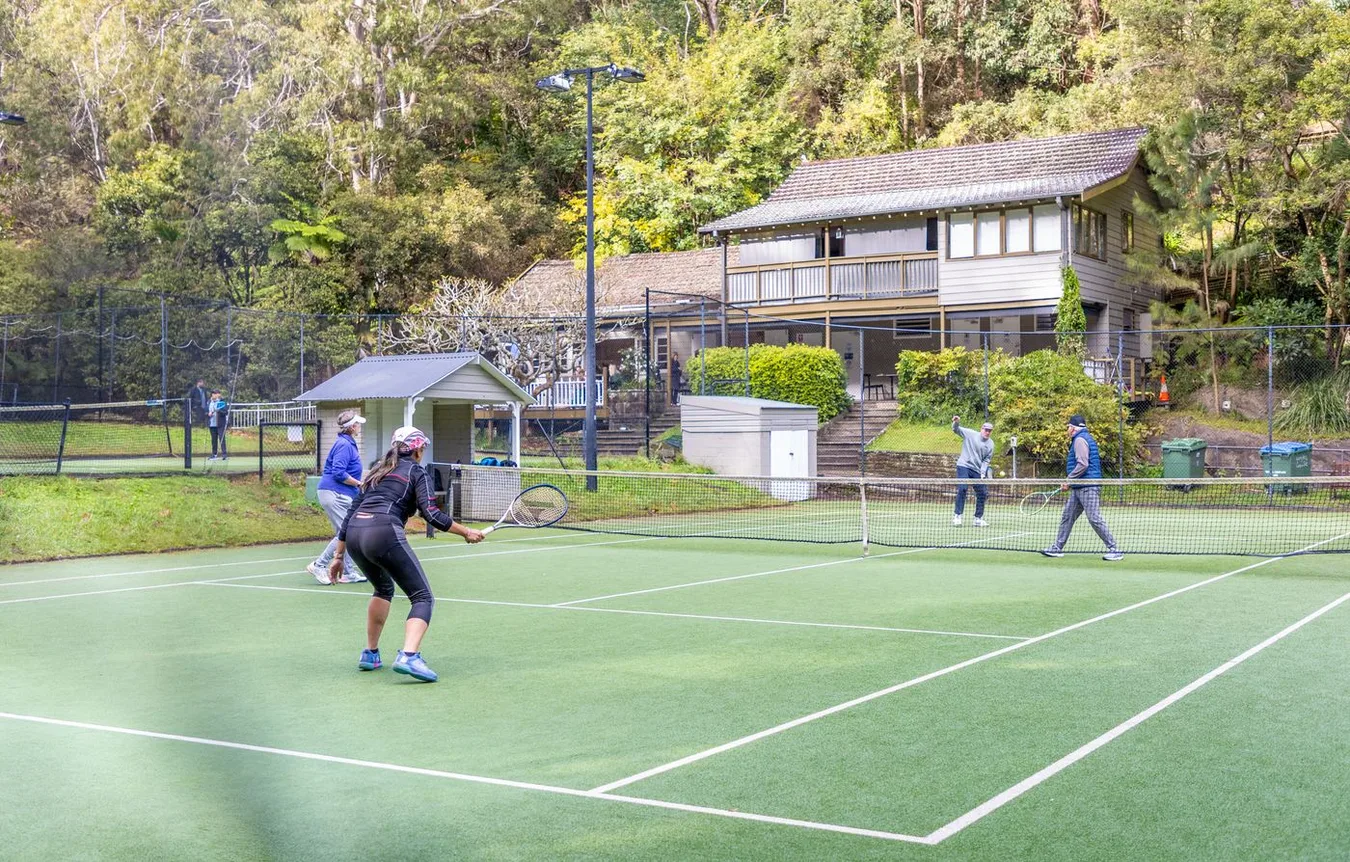
In the simplest lob exercise, everybody knows the ball is going up. Both players have time to look at it and choose a response. During a match the same pair may be moving toward the net when the ball rises. One person sees its height but is still moving forward. Their partner has farther to the projected landing point but can turn and see the ball's path. Learning which parts of that decision each person can see gives an ordinary practice a clearer purpose.
Mark two comfortable starting positions using the court lines. One can be closer to the net and the other can allow more depth. Ask the feeder to send a high ball over the nearer player's side at an accessible pace. Have both partners first point to the direction they would move if the ball continued on its path. Use a short call and give attention to what the person leaving the ball can do. There is a second job even when the best response is to let the farther player run back.
Let the ball provide two separate pieces of information
A gradually rising ball can be easy to locate at first and still carry beyond a player who expected it to stop early. The distance to the bounce changes the available contact. The time before it arrives decides whether somebody can move, settle and take a comfortable shot. A player closer to the net may have enough time for one sort of ball and little chance against another. Try feeding two similar-looking arcs with different depth. Compare who has a better view of each path after the first steps.
Tell both players which second movement is easy to see. The person leaving the ball to a partner may have to wait long enough to know where the partner is heading. If they immediately turn to cross the court, the two players can move into the same route. A single call can mark a real change in assignment. Let a familiar motion take care of the balls where both players already understand the answer.
Observe the shot after the recovery
Have the player retrieving the ball use an ordinary deep reply. Let the opposite team send it back at a modest pace. The partner who did not take the lob can use the direction of their own player's reply to choose a place from which they can see the next opponent. If the answer travels high, both partners may have enough time to regain a balanced shape. A lower emergency ball can make one side of the court suddenly more relevant. The recovery and the shot create that next position together.
Allow a second trial where the same person fails to get behind the ball comfortably. Stop and ask what they could see as it moved over their shoulder. This reveals whether a known ball should be left earlier or whether starting farther back might help. Changes of depth are easy to test on a quiet practice court. A clear first call becomes easier as the pair learns what each player can reach without turning blindly or rushing into the other player.
Rehearse the choice at normal pace
Finish with a handful of normal points that may or may not contain a lifted ball. Keep the call but allow the play to develop. The person at the net may notice the opponent preparing a high reply and hold a little room before the ball leaves the racket. The partner farther back can make a clear move when their better view becomes useful. Then watch whether the ball handler and the partner prepare for the same likely reply.
An early lob in a match can tell a pair which of these movements happens naturally. Take one observation from it and make one modest change for another point. The aim is a ball both people put into their own familiar sequence of choices. One person has a path to it. The other knows where the pair will be after it has been played.