Let the returner set the starting depth
A doubles partner can help a returner by moving in relation to the expected contact point and the reply the other team can reach.
No stories match this search. Try another term or section.
A shared rule for the first volley through the middle gives both partners time to move. The useful agreement leaves room for a ball that arrives higher, deeper or faster than expected.
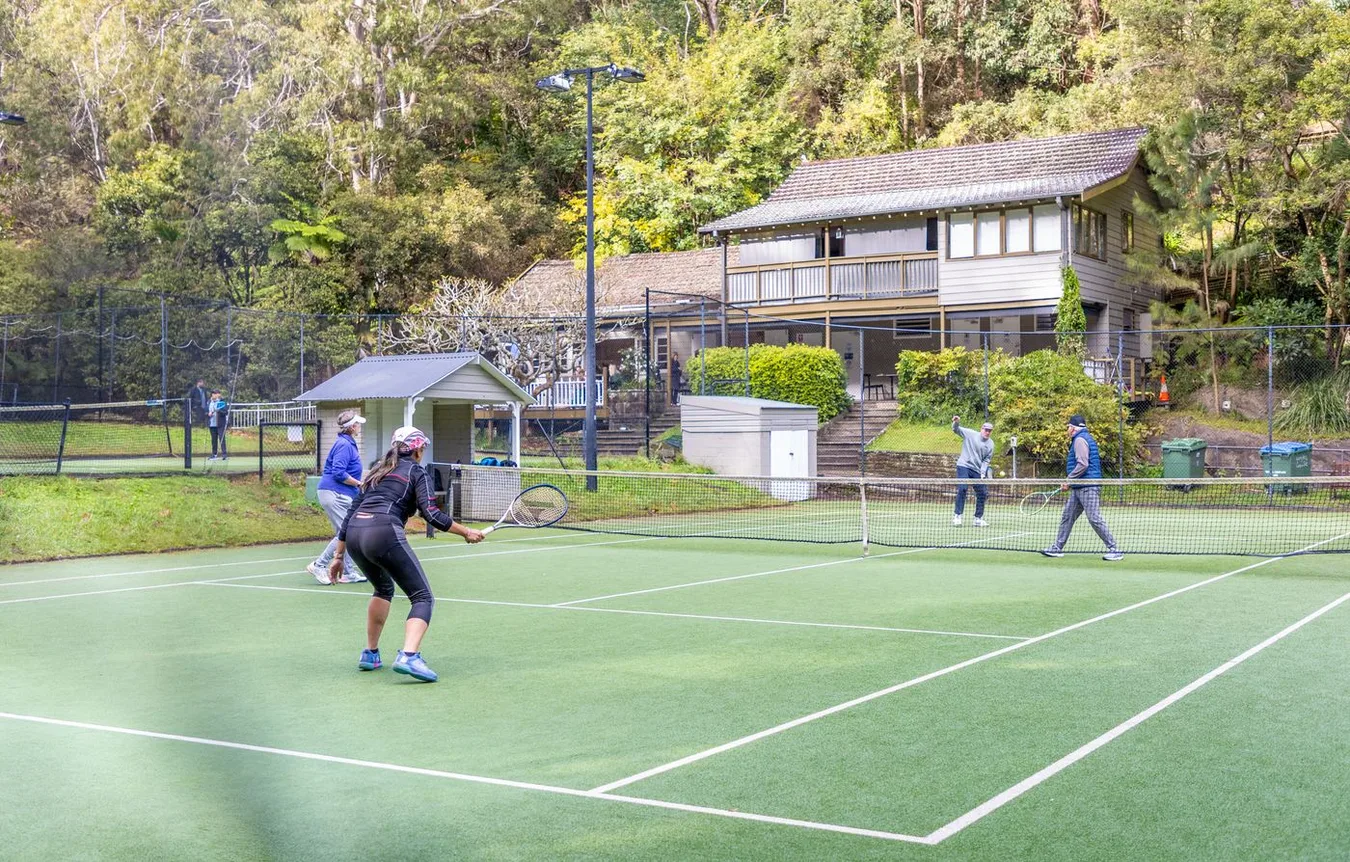
A couple of concrete questions can settle the first return and the first ball through the middle before two unfamiliar players begin to guess.

Use the first warmup balls to locate ordinary targets and an agreed recovery position. Those opportunities are easy to miss when everyone defaults to hitting straight ahead.

A doubles partner can help a returner by moving in relation to the expected contact point and the reply the other team can reach.
A broad target in a cooperative doubles drill helps a receiver distinguish a ball they can guide across court from a ball they simply need to keep in play.
A clear crossing call lets two partners trade coverage without both moving toward the same part of the court.
The first move reaches the ball. A second movement by both partners can determine whether the pair can use the next reply.
A team can practice deciding who tracks a lifted ball and who protects the next reply. Starting position and the direction of travel matter as much as a call.
A changeover is long enough to agree on a small correction. Make it specific enough to recognize when you return to court.
A four-person session works when the feed, first response and next response all offer something to practice. Small rotations keep that work visible.
A staggered starting position lets partners see different things. Test which replies each person can reach before deciding whether to move together.
Give the first volley a generous target and play the next ball. The value of the target appears in what both partners can reach afterward.
Players separated by a whole court receive different evidence about the next ball. Share a specific observation before asking your partner for a change.
A deep return can give the team a chance to recover. Decide where each partner can stop and see the opponent before pressing forward again.
A call can begin the exchange of positions. The receiving pair also needs a clear end so each person can prepare from the side they actually reached.
A controlled comparison of one step forward and one step back lets a receiver see how contact, target and partnership coverage change.
When the ball travels diagonally, both partners can see a new route down the line. Test how much movement is useful before taking away a comfortable middle.
A pre-point agreement should give the net player one useful expectation and the server a second position they can actually reach.
A high, ordinary reply can give a stretched pair time. Check whether both players actually use that time before the other team has its next choice.
A player waiting ahead may accidentally screen the important contact from a partner. Compare slight offsets before asking either person to move farther.